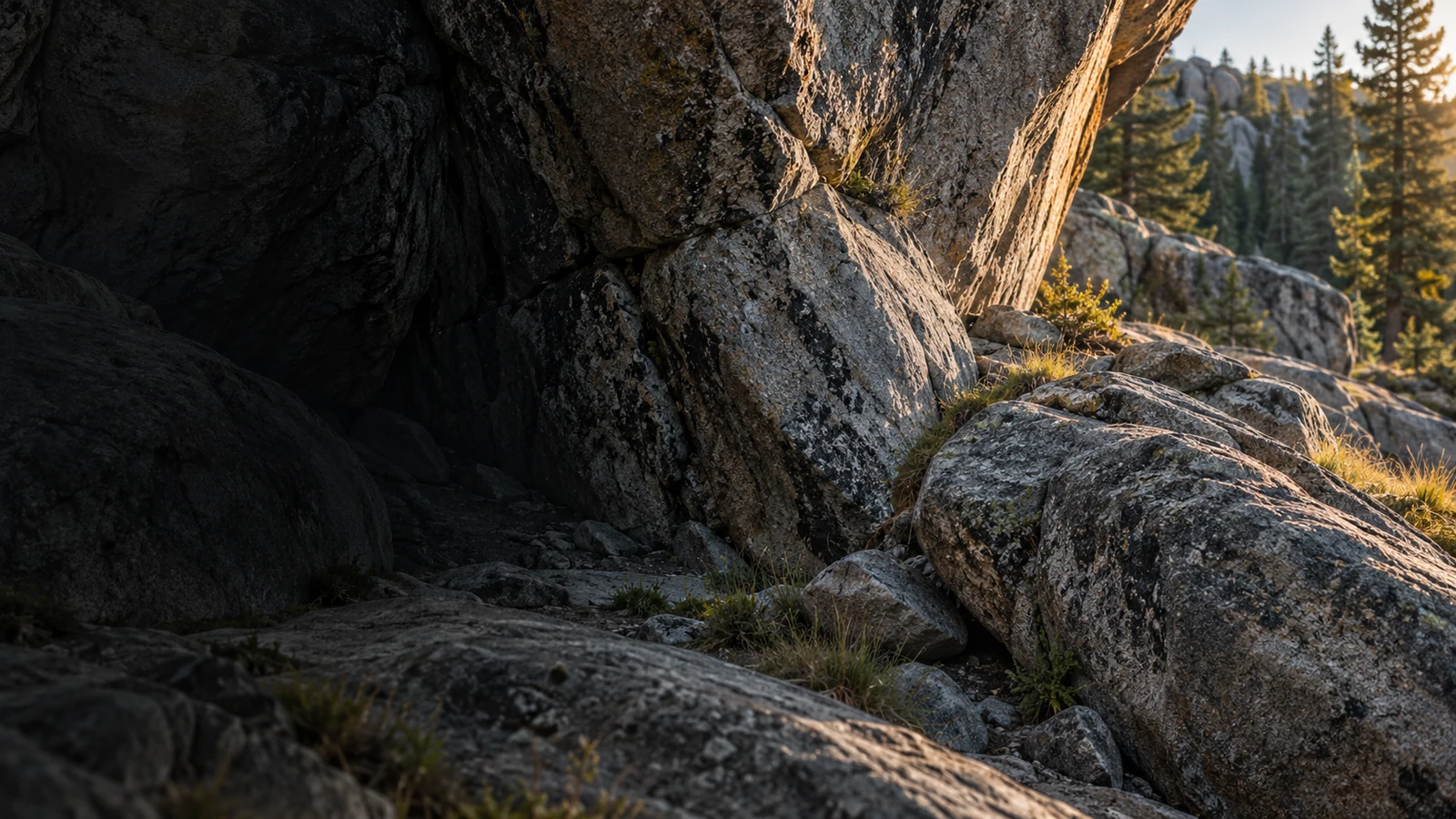
Balance and Reaction Time on Uneven Terrain

Roots, rocks, gravel, mud, angled slabs, and tired legs all ask the same question: can you place your foot, correct your balance, and keep moving before a small error turns into a fall?

That is the failure mode most hiking plans ignore. They train the engine, but not the steering. You can have strong legs and still get clumsy when fatigue slows your reactions.

This is Demand 2 in The 5 Physical Demands of Hiking. It is not a full plan. It is a skill block for understanding balance, reaction time, foot placement, and stability on uneven terrain before the trail starts charging interest.

Table of Contents

Balance and Reaction Time: What Matters Most

  • Fitness for hiking is not just strength and cardio. Uneven terrain also requires coordination, balance, and fast corrections.
  • Fatigue can make foot placement slower and sloppier before you feel truly weak.
  • Most plans train what is easy to measure, not what keeps you upright on rocks, roots, gravel, mud, and angled trail.
  • Balance training for hikers should be practical, specific, and tested under light fatigue.
  • The goal is not circus tricks. The goal is cleaner steps, fewer saves, and better decisions when terrain gets rude.

When Strength Outruns Your Ability to Correct

The failure mode is simple:

You are strong enough to move, but too slow to correct.

On trail, many mistakes are not dramatic at first. They start small.

A toe catches. A rock tilts. Gravel slides. Your ankle wobbles halfway. Your hip reacts late. Your trekking pole lands behind the problem instead of before it. Your eyes stop scanning ahead, and suddenly you are walking into problems instead of around them.

If you are fresh, you may correct it easily.

If you are tired, hungry, under-fueled, distracted, moving downhill, carrying a pack, or racing weather, the correction window gets smaller.

That is the real issue. Uneven terrain is not just a strength test. It is a control-and-correction test.

Research on postural control shows that fatigue can disrupt dynamic control, especially around the ankle and lower limb system. [1] Hiking is not a lab test, but the trail does not care about your category labels. If fatigue changes your control, technical ground gets more expensive.

On the Colorado Trail, Segment 24, I got mentally foggy descending toward Elk Creek and followed what looked like trail into a steep, loose, rocky line. It was not trail. Once I realized it, I had to climb back up unstable terrain while tired, annoyed, and second-guessing myself.

Nothing about that slope required heroics. It required the opposite: slow down, place the feet cleanly, use poles deliberately, and stop letting fatigue make decisions.

That is the skill.

Why Strong Hikers Still Get Clumsy on Technical Terrain

Most hiking plans are built around what is easy to measure:

  • heart rate
  • pace
  • weekly mileage
  • squat numbers
  • stair climber time
  • elevation gain

Useful, yes. Complete, no.

Those numbers can build fitness. They do not automatically teach your body to respond to unstable ground in real time.

The Gym Trains Strength, Not Terrain Response

The gym is controlled. The floor is flat. The load is predictable. The movement pattern is clean.

Trail is not like that.

On uneven terrain, your eyes, brain, feet, ankles, hips, trunk, and poles are all working together. Your foot lands, senses the ground, adjusts pressure, and sends information up the chain. Your ankle reacts. Your hip controls the femur. Your trunk keeps your center of mass from wandering into a little disaster.

If any of that lags, you get the classic trail sequence:

Toe catch → stumble → ankle wobble → panic correction → near fall.

That is not solved by leg extensions.

Cardio Capacity Does Not Guarantee Clean Movement

Cardio plans often assume the main question is whether you can keep going.

On technical trail, the better question is whether you can keep going cleanly.

Uneven terrain increases movement variability and metabolic cost compared with smooth, level walking. [2] In plain language: the ground is doing more than making the hike scenic. It is changing how you move and how much energy it costs to move.

This is why a hiker can feel fine on smooth trail, then suddenly feel sloppy on rocks, roots, or loose descent. The body is doing more correction work.

Mileage Goals Can Reward Sloppy Footwork

A mileage plan can accidentally reward sloppy movement.

You planned 20 miles. The terrain says 14 would be smarter. Your legs say they can keep moving. Your feet say they are getting lazy. Your brain says you are behind schedule.

This is where strong hikers get into trouble.

In the gym, redlining is usually contained. On trail, redlining can mean your correction speed drops at the exact moment the terrain asks for precision.

If your plan only works when the ground is predictable, it is not a trail plan. It is a flat-ground plan wearing hiking shoes.

How to Train Reliable Corrections Under Fatigue

You are training reliable corrections under fatigue.

Think in four buckets:

  1. foot placement speed
  2. single-leg stability
  3. toe clearance and step-over control
  4. visual scanning and decision speed

1. Make Clean Foot Placement Automatic

Foot placement speed is how quickly you can choose and place a clean step when the ground changes.

This matters because uneven terrain rarely gives you perfect choices. You are constantly solving small problems: where to step, how hard to load it, whether it will shift, whether the next step is better, and whether your pack changes the landing.

You do not need to be fast. You need to be timely.

When fatigue slows that timing, toe catches and sloppy landings get more common.

2. Build Single-Leg Control That Holds Under Fatigue

Every hiking step is a brief single-leg task. On uneven ground, it is a single-leg task with surprise angles.

Balance and proprioceptive training has been shown to reduce ankle sprain incidence in athletic populations, including people with and without previous ankle sprain history. [3] Hiking is not court sport, but ankles are still ankles, and trail surfaces are not polite.

The goal is not to stand on a wobble board for internet points. The goal is to improve your ability to control the hip, knee, ankle, and foot when the step is imperfect.

3. Train Toe Clearance Before the Trail Tests It

Toe catches are boring until they are not.

They happen when fatigue makes the foot lazy, the terrain grabs your shoe, or your brain underestimates what needs to clear the ground.

On Segment 6 of the Colorado Trail, a branch sticking out of the dirt caught the mesh on top of my shoe and nearly pitched me toward the edge. My poles and reaction saved it. I still ended up on all fours, doing my best impression of a startled woodland creature.

The branch did not care how fit I was. It just existed.

Train step-over control, not because you are fragile, but because trails are full of little traps with excellent timing.

3. Train Toe Clearance Before the Trail Tests It

If your eyes stop working, your feet inherit the problem.

Good trail movement means scanning 2 to 3 steps ahead, then confirming foot placement. Not staring only at your shoes. Not looking at your phone. Not drifting into town-food fantasies while moving through loose rock.

Your eyes help your brain plan. Your feet execute the plan. When fatigue narrows your attention, that system gets worse.

Uneven-Terrain Rules That Actually Matter

Do this:

  • Slow down when toe catches, ankle wobbles, or sloppy steps increase
  • Use trekking poles as planned stability points, not panic sticks
  • Practice controlled step-overs, lateral movement, and single-leg balance when slightly tired
  • Scan ahead 2 to 3 steps, then confirm foot placement
  • Train stability in normal shoes, hiking shoes, and with light load when appropriate

Avoid this:

  • Bombing technical descents when fatigued
  • Speed-matching other hikers on sketchy terrain
  • Training only on flat ground and assuming trail will transfer cleanly
  • Using trekking poles only after something already feels scary
  • Treating ankle rolls and falls as unavoidable initiation rituals

Trekking poles are not magic, but they can be useful. A review of trekking pole research found that poles may reduce lower extremity loading and forces, while also offering potential benefits for balance and stability when carrying load. [4] Use them like a system, not decoration.

A Simple Trail-Stability Training Frame

This is not a full plan. It is a principle layer.

Use drills that make your body solve small trail-like problems:

  • Single-leg holds: balance with a quiet hip, then repeat after a walk or workout
  • Step-over drills: clear a low obstacle cleanly without rushing
  • Lateral step-downs: practice controlled sideways movement
  • Four-point foot placement: step to different targets without collapsing into speed
  • Trail scanning walks: practice eyes-up planning on easy terrain before hard terrain
  • Loaded easy walks: add light pack weight once movement quality is clean

The standard is not speed. The standard is control.

If you want a simple field test for this demand, use the Reaction Time & Stability Field Test. Run it fresh, then repeat it after a walk, workout, or loaded shakedown hike. The difference matters.

Is Uneven Terrain a Blind Spot in Your Hiking Plan?

Answer this like someone who wants useful information, not a gold star.

  1. When tired, do you start dragging your feet or clipping rocks more often?
  2. Do you catch your toes on roots, branches, or trail edges at least once per hike?
  3. Do you feel unstable stepping down off rocks, especially with a pack?
  4. Do you look at your phone or talk while moving on technical terrain?
  5. Can you balance on one leg for 30 seconds per side without collapsing into your hip?
  6. When you stumble, does your ankle wobble before you catch it?
  7. Do you rely on trekking poles so much that rough terrain feels unsafe without them?
  8. When you are hungry, tired, or behind schedule, do you speed up on sketchy sections?
  9. Have you rolled an ankle, even mildly, in the last year?
  10. At the end of a long day, do you stop scanning ahead and start staring only at your feet?

If several of these hit, that is not a moral failure. It is a skill gap.

Skill gaps are trainable. Ignored skill gaps become trail stories you tell later with nervous laughter.

Why Every Other Trail Demand Shrinks Your Margin

Balance and reaction time are survivable alone. A toe catch is survivable. A small ankle wobble is survivable. A sloppy line choice is survivable.

Stacked with downhill braking, pack weight, elevation, weather, long mileage, and fatigue, the margin gets smaller.

That is why this sits inside the larger hiking system. You are not training balance in isolation. You are training the body to keep making clean corrections while the rest of the trail is also asking for strength, endurance, breathing control, load tolerance, and judgment.

If you have not read the full framework, start with The 5 Physical Demands of Hiking.

Next in the series: Elevation & Acclimation. Uneven terrain asks whether you can correct mistakes. Elevation asks whether your system still works when the air gets thinner and your margin shrinks.

Choose Your Next Step

Start With the Field Test

Use the Reaction Time & Stability Field Test to test foot placement speed, single-leg stability, and fatigue drop-off before a major hike.

Get a Personalized Stability Plan

If you want someone to look at your current fitness, trail target, balance patterns, pack setup, and weak links, start with a hiking consultation.

That can include movement observation, field testing, shakedown planning, training structure, and a clearer path from “I hike a lot” to “I move better when tired.”

Build the Complete Training System

This series gives you the map. It shows you what hiking actually demands from your body and why most generic workout plans miss the mark.

The harder part is turning that knowledge into a weekly structure that fits your timeline, current fitness, terrain access, pack weight, and the hike you are actually preparing for.

That is what the Complete Hiking Elevation Training System is built to do.

Train the Steering, Not Just the Engine

Fitness for hiking is not just strength and cardio.

It is staying coordinated when terrain is chaotic, weather is rude, your pack is present, and your brain is tired.

If this feels manageable, you may be able to self-run the basics: slow down when precision drops, train foot placement, test balance under light fatigue, and use poles deliberately.

If this feels overwhelming, that is useful information. It usually means you are not missing motivation. You are missing a structure for turning trail movement into training.

Up Next: Elevation Shrinks the Margin

Uneven terrain asks whether you can correct the mistake in time.

Next up: Elevation & Acclimation, where the question changes from “Can you stabilize?” to “Can your whole system still function when the air gets thinner?”

Is this a blind spot for me?

Sources

  1. Gribble PA, Hertel J, Denegar CR, Buckley WE. The Effects of Fatigue and Chronic Ankle Instability on Dynamic Postural Control.
  2. Voloshina AS, Kuo AD, Daley MA, Ferris DP. Biomechanics and Energetics of Walking on Uneven Terrain.
  3. Rivera MJ, Winkelmann ZK, Powden CJ, Games KE. Proprioceptive Training for the Prevention of Ankle Sprains.
  4. Hawke AL, et al. Are Trekking Poles Helping or Hindering Your Hiking Experience? A Review.

Choose The Path Ahead

Explore the System

Find Your Weak Link

Customized Prep Plan

Share this Resource:

Related Posts

Get the Field Notes
Before Everyone Else

Subscribe to Type Two Fun for practical guides, field-tested systems, and smarter ways to prepare for the miles ahead.