
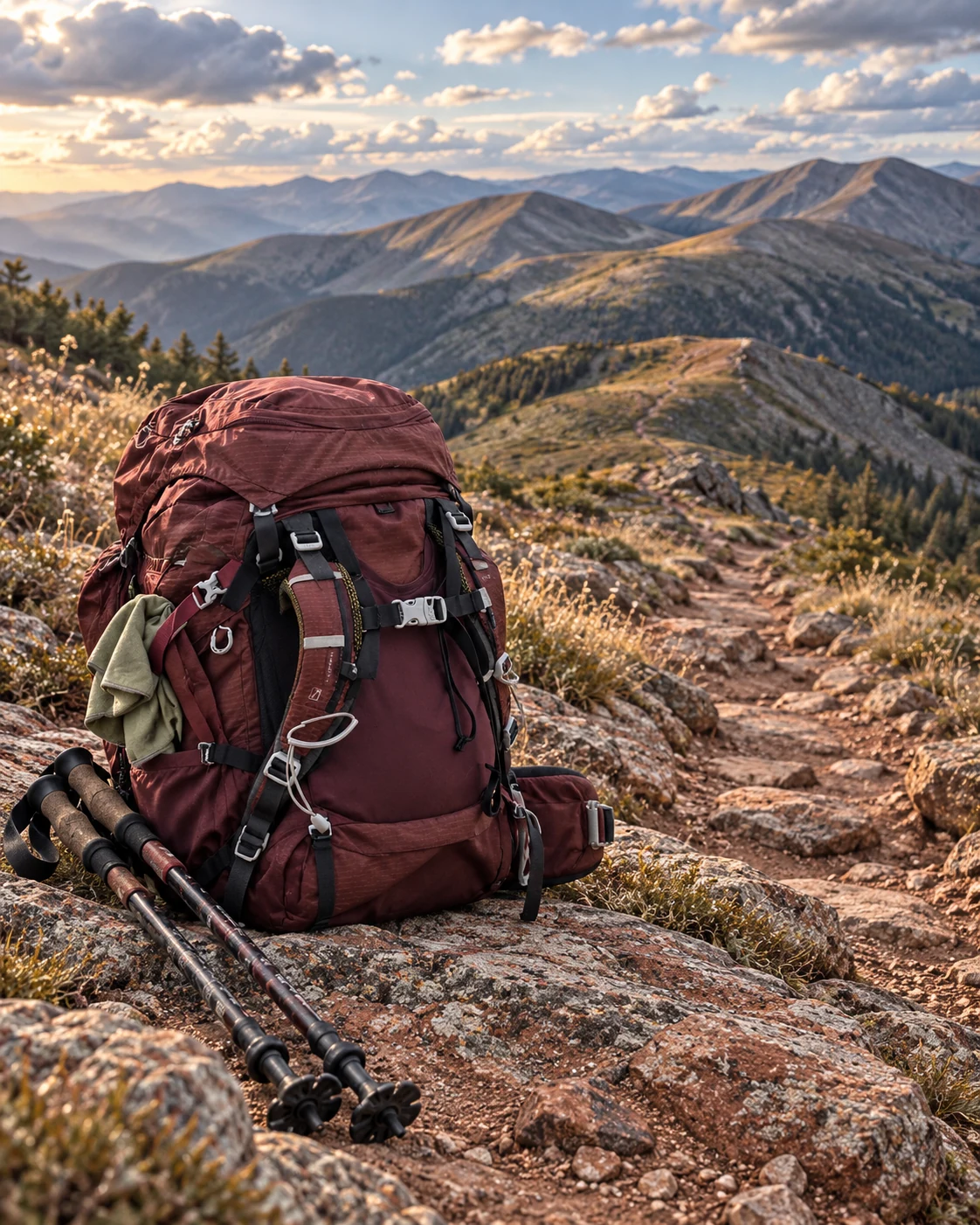
THE PACK CHANGES THE JOB.
Walking with a backpack changes the load your body manages. Fit, weight, terrain and duration all matter. A comfortable pack in the living room has not yet answered the questions a long day will ask.
Start by separating base weight, worn items and consumables. Your heaviest expected carry includes food and water, not just the neat gear layout on the floor. The Interactive Gear List helps make those categories visible.
START LIGHT. BUILD DELIBERATELY.
If regular walking is new, build that routine first. Then introduce a light pack on manageable terrain. Use the pack you intend to take when practical, and check how it feels while moving.
- Adjust the hip belt, shoulder straps and load lifters according to your pack’s fitting guidance.
- Keep the sternum strap comfortable; it should not restrict breathing.
- Progress time or weight gradually rather than increasing load, hills, speed and duration together.
- Review feet, shoulders and hips during and after the walk. Numbness, pinching and hot spots need attention.
A heavier training pack is not automatically more useful. Match the preparation to your objective and current capacity.
AUDIT THE SYSTEM, THEN TEST IT.
In my gear autopsy, the useful distinction is between redundancy that protects an essential function and extra items that do not solve a real problem. Water treatment and navigation deserve different decisions than another comfort item.
Do not cut water or essential protection to hit a weight target. Plan carries around current conditions and reliable information, with an appropriate margin. Take the assembled system on a shakedown hike and write down what needs changing.
EXPLORE THE INTERACTIVE GEAR LIST ↗PUT IT INTO YOUR PREPARATION
WHAT DOES YOUR OBJECTIVE ASK?
These ideas are a starting point. Coaching connects your current routine, timeline, gear and route into a plan with individual scope.
REQUEST A FREE CONSULTATION ↗