Why You Need a Gear List

A gear list is not just a shopping list.

It is a forecast of what your body, feet, joints, budget, comfort, and recovery capacity are going to deal with every day on trail.

When your gear is organized clearly, you can see what is essential, what is duplicated, what is missing, and what is quietly making your pack heavier than it needs to be.

A good gear checklist helps you answer questions like:

  • What am I actually carrying?
  • What am I wearing?
  • What gets used up as I hike?
  • Where is most of my pack weight coming from?
  • Which comfort items are worth it?
  • Which items are just fear-packing in a cute little hat?

This checklist is built from a real 3-season thru-hiking setup and designed to help you understand the logic behind a complete pack, not blindly copy someone else’s gear.

gear_checklist_instructions_3

What a Checklist Cannot Tell You

A checklist can show you what to pack.

It cannot always tell you what actually belongs in your pack.

That is where gear planning gets more personal. The right setup depends on your route, season, weather, elevation, budget, pace, fitness, experience level, comfort tolerance, and how much uncertainty you are willing to carry.

A generic gear list cannot tell you:

  • Whether your fleece is useful or redundant
  • Whether rain pants are smart insurance or unnecessary weight
  • Whether your water capacity matches the route
  • Whether your food plan is realistic
  • Whether your pack weight makes sense for your body and training
  • Whether your gear matches the season, elevation, bugs, storms, and resupply spacing
  • Whether you are missing something important
  • Whether you are packing out of experience, preference, or fear

That is why I offer gear list support, gear recommendations, and both initial and final gear audits inside my coaching packages.

What's Inside the Gear List

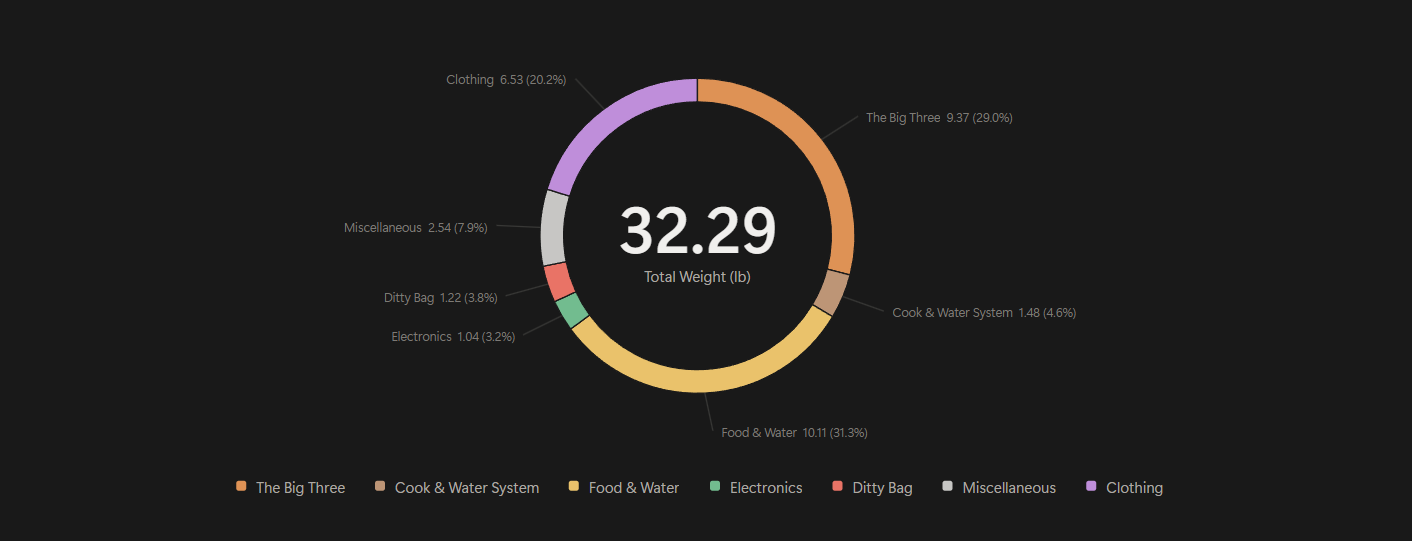
This 3-season gear checklist is organized by the major systems that make up a real trail setup, so you can see how each category contributes to overall pack weight.

  • The Big Three: Pack, shelter, sleep system, and the core items that usually make up the biggest chunk of base weight.
  • Cook + Water: Stove, pot, fuel, filter, water containers, and backup treatment considerations.
  • Clothing: Layers for hiking, sleeping, storms, sun exposure, cold mornings, and camp comfort.
  • Electronics: Phone, satellite messenger, headlamp, power bank, charging cords, and navigation-related gear.
  • Ditty Bag: The small stuff that quietly adds up: repair items, first aid, hygiene, toiletries, tape, wallet, and trail odds and ends.
  • Food + Water: Consumable weight that changes throughout the trip, including food carries, water carries, and fuel.
  • Worn vs. Carried: A clearer way to separate what is on your body from what is actually sitting in your pack.
  • Consumables: Items that get used up over time, so your starting trail weight and your base weight do not get confused.

This checklist is not meant to be copied item-for-item. It is meant to show how a complete 3-season setup can be organized, weighed, and evaluated before you hit the trail.

Want Help Building Your Actual Trail Setup?

The gear checklist shows you how a complete 3-season thru-hike pack can be organized.

If you want access to the working Notion gear list template, with the category system, weight conversions, worn/carried tagging, consumables, and pack weight chart, that is included with qualifying gear audit and hiking prep coaching services.

This is where we build your actual setup, not a generic internet gear list.

A gear audit or coaching package can include:

  • Your personalized Notion gear list setup
  • Pack weight breakdowns by category
  • Worn vs. carried vs. consumable tagging
  • Route-specific gear recommendations
  • Initial gear audit
  • Final pre-trail gear audit
  • Clear what to keep, what to cut, and what to rethink decisions

You do not need to buy your way into a better pack.

You need a system that matches your route, season, body, budget, and experience level.

Build the Pack Before You Carry the Pack

A gear checklist helps you build the pack.

A shakedown hike shows you how that pack actually performs.

Once your setup is assembled, take it outside, move with it, and see what changes when fatigue, terrain, weather, and weight get involved.

Your gear list is the plan.

Your shakedown hike is the proof.